ServicesWater Softener Installation
Water Softener Installation in Citrus Park
We size, install and program water softeners for homes in Citrus Park and the West Valley. One person handles your job from the first conversation to the final walkthrough, so you always know who set up your system and who to ask about it.
A softener that fits how your home uses water
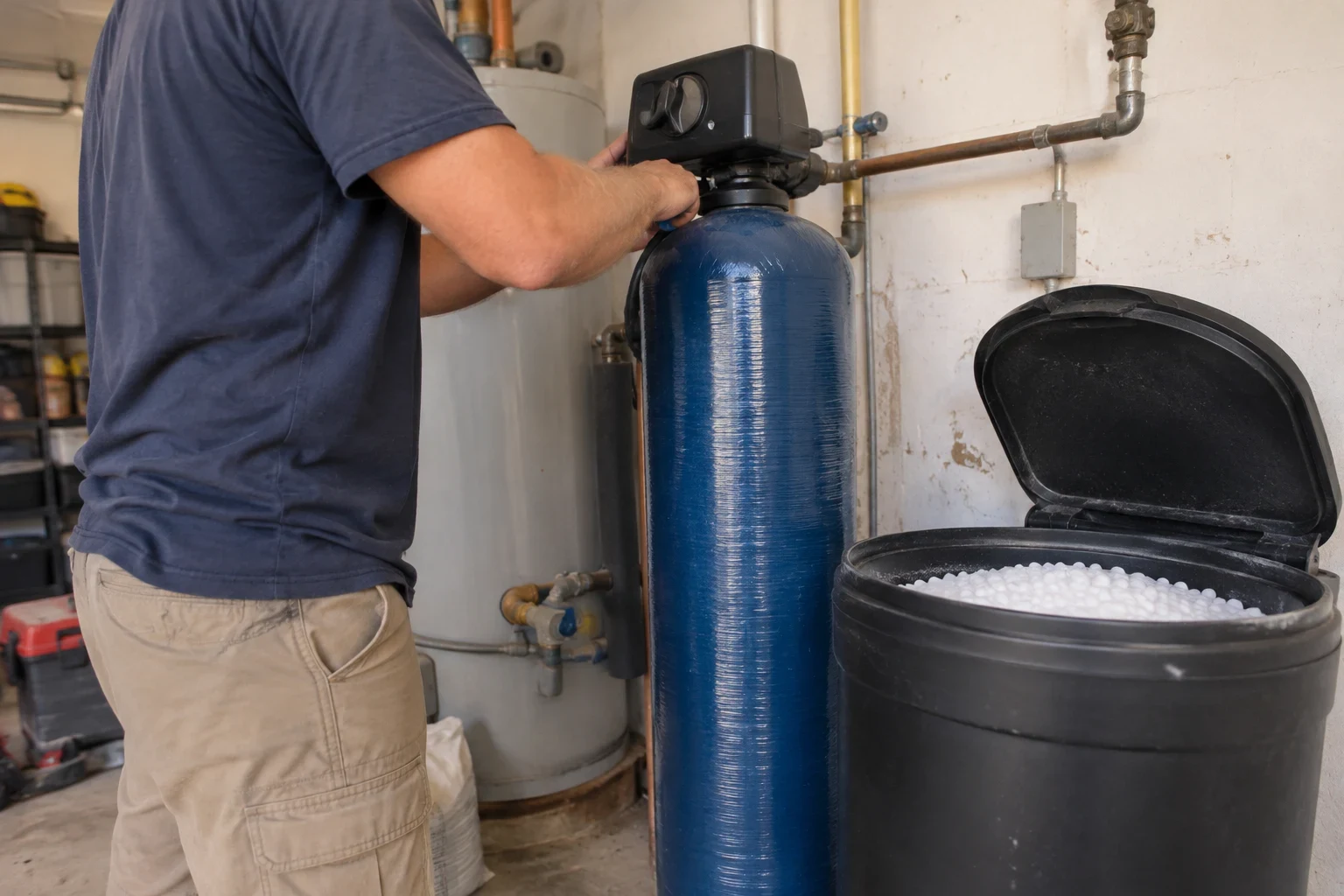
Calcium and magnesium in hard water stay behind wherever water sits or gets heated. On the surface that shows up as chalky rings around faucets and spots on glass. Out of sight, the same minerals settle inside your water heater and dishwasher. A softener trades those minerals away in a resin tank before the water ever reaches your fixtures.
Good equipment is only half of it. The other half is matching the unit to your home. Too small, and it runs short of capacity before the next cycle. Too large, and it burns through salt and water it never needed. We ask who lives there, the number of baths and daily habits like laundry loads and long showers, then suggest a capacity and control valve that suit the way you live rather than the biggest model we carry.
The person you speak with on your first call is the same one who schedules the work, checks the finished install and takes your questions later. If drinking water or salt refills come up down the road, our reverse osmosis system and automated salt delivery services are there to talk through as well.
What comes with every installation
- Sizing and valve choice
- We match grain capacity to your household's real daily water use. In most homes we recommend a metered valve that regenerates once a measured volume has passed through, not on a fixed calendar.
- Hookup to your softener loop
- Many newer homes have a plumbed loop waiting in the garage. We tie into it with clean fittings, support the lines and keep each joint tidy and easy to inspect.
- A bypass valve
- Every install includes a bypass. Turn it and the softener is out of the circuit for service or yard watering, while water keeps flowing to the rest of your home.
- Drain line and air gap
- The regeneration line runs to a proper drain point and ends with an air gap. That small open break keeps spent brine from siphoning back toward the unit.
- Programming and handover
- We set your hardness, capacity and regeneration time, then show you around the control head. Before we go, you will know how to check the salt level and what a brine tank in good shape looks like.
- Haul-away and tidy finish
- If an old softener is being replaced, we unhook it and load it onto our truck for disposal. Your garage floor is swept and left as clear as we found it.
When hard water is telling you it is time
White buildup at the tap
A chalky film that returns within days of cleaning faucets and showerheads means minerals are dropping out of your water all the time.
Cloudy glasses, spotted glass doors
That haze on drinking glasses and the shower enclosure is usually mineral residue, not soap left behind.
Rumbling from the water heater
Popping sounds inside the tank often mean scale and sediment have built up on the bottom. The heater then runs longer to bring the same water up to temperature.
Shampoo that barely foams
Hardness minerals bind with soap, so you use more to work up a lather and still notice a dull film on skin and hair.
An older softener losing ground
A unit that goes through salt quickly or lets hard water get by may cost more to fix than it is worth. Replacing a dated valve and tank is frequently the better choice.
What moves the price of a softener install
Every home is plumbed a little differently, so we quote yours after we hear how it is set up. Most of the price comes down to the equipment you choose and the pipework it takes to fit it properly.
An existing softener loop
If your builder roughed in a loop, hooking up to it is a short, simple job. Without one, we tap into the main line and run fresh pipe to the unit, which adds labor and materials.
Tank size and control valve
A larger resin tank paired with a metered valve carries a higher upfront price. A unit matched to your household usually uses less salt and less water as the years go by, which offsets some of that difference.
How far the drain is
A suitable drain close to the softener keeps the regeneration line short. When the nearest proper drain is farther away, the route takes more time and more parts.
Removing what is already there
Some installs mean pulling out an old softener or correcting plumbing someone else put in poorly. Many need neither, and your quote shows exactly which applies.
How installation day runs
- 1
Start with a phone call
Describe your home, the buildup you see and anything else that has been bothering you about the water. We go over sizing and choices together, and you get a clear quote by phone.
- 2
Arrival and protection
On the day, we agree on where the softener will stand, turn off the water and cover the floor and nearby surfaces before cutting any pipe.
- 3
Plumbing and setup
We fit the bypass, make the inlet and outlet connections, route the drain line and fill the brine tank. On an existing loop, most installs wrap up in a few hours.
- 4
Startup and walkthrough
The system is flushed, every joint is checked for drips and the valve is programmed. We show you the controls, and the same person remains your contact once we have gone.
Water softener installation questions
Does a softener make my water safe to drink or take out chlorine?
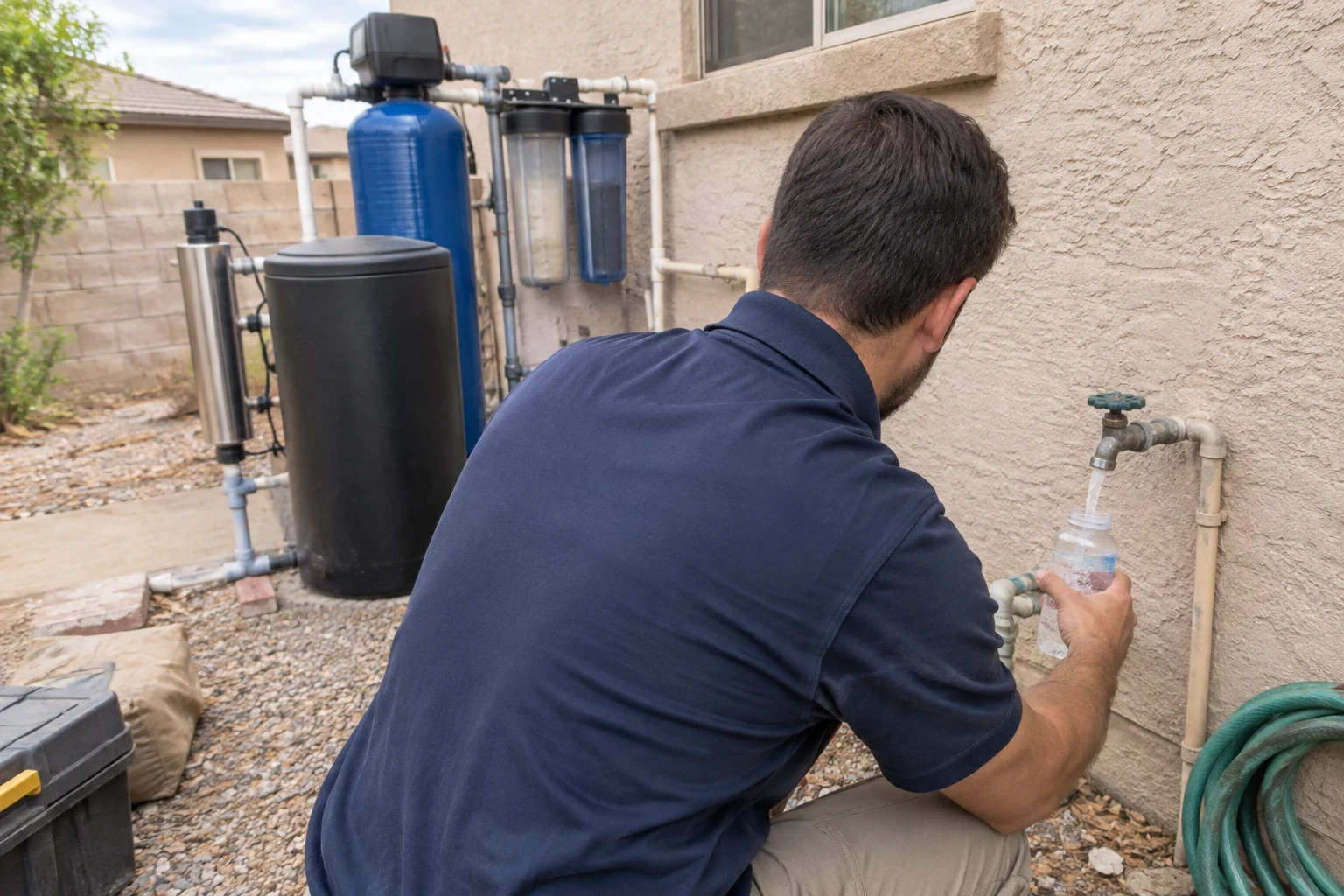
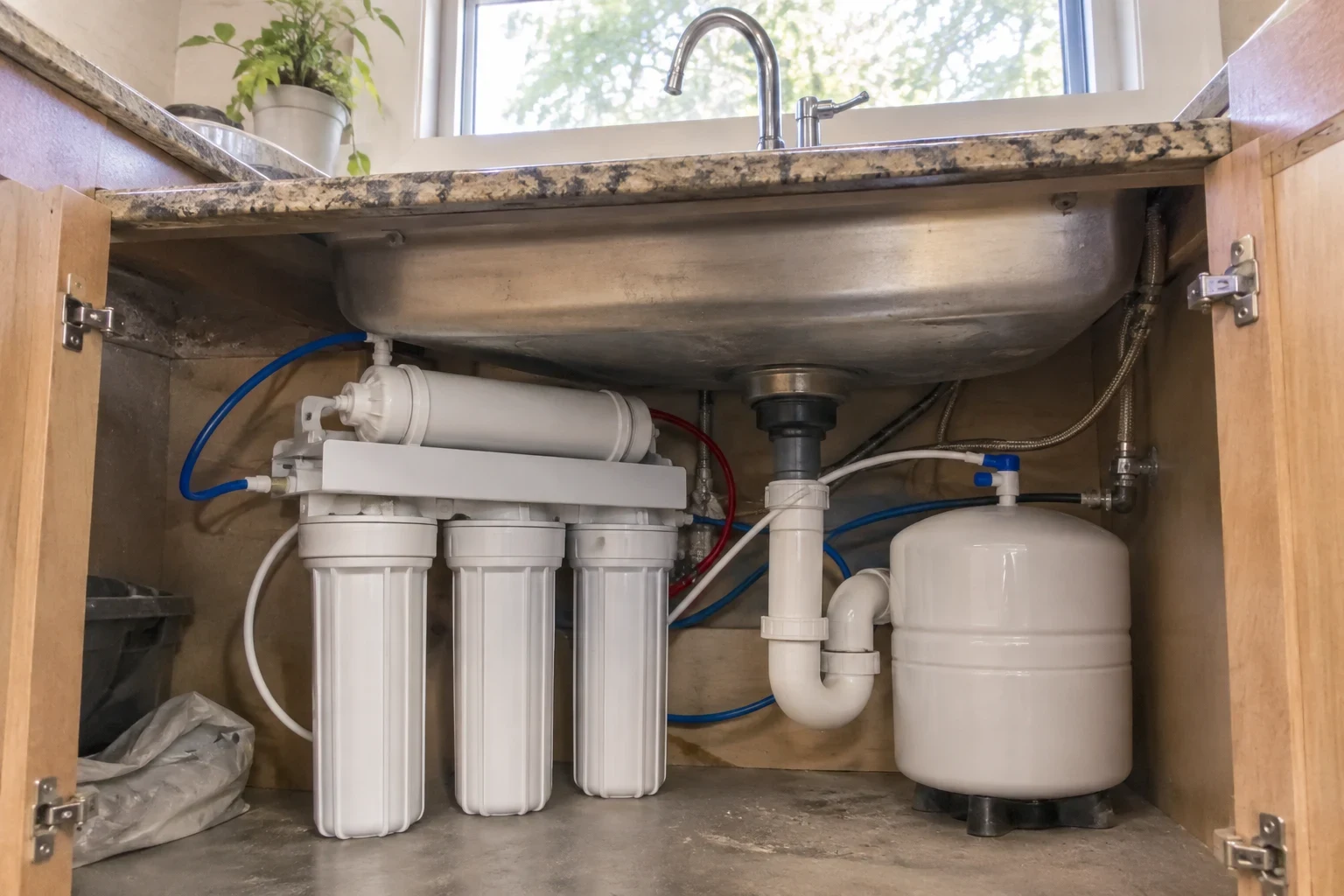
No. Its job is pulling out hardness minerals, not improving taste or catching trace contaminants. For chlorine taste at every tap, our whole-home filtration is the better match. For drinking and cooking water at the kitchen sink, look at a reverse osmosis system.
Will softened water feel slippery?
It often feels smoother in the shower during the first days. That is soap washing away completely rather than binding with minerals. Most people get used to it within a couple of weeks.
Is potassium an option in place of salt?
It is. The majority of softeners will run on potassium chloride for anyone who wants to skip added sodium. Bags generally cost more, and we change the settings so the unit regenerates correctly with it.
Where does the softener go?
In most homes it sits in the garage at the softener loop, near where the main line comes in. Without a loop, we pick the most sensible spot close to the main line and a drain, and we go over the pros and cons with you before we start.
How often will I need to add salt?
It varies with the size of your household and the capacity of the unit. A refill every month or two is common. If carrying heavy bags is a chore, our automated salt delivery service keeps the brine tank stocked on a set schedule.
Ready to put hard water behind you
Tell us about your home and the buildup you are seeing. One person will size your softener, schedule the install and stay your contact after the job is done.