ServicesWhole-Home Filtration
Whole-Home Filtration in Citrus Park
We fit a carbon filter on the main line before it branches through your home, so drinking water, showers and the ice maker lose that pool-like chlorine smell. The same person takes your call, plans the work and walks through the finished install with you.
Cleaner-tasting water from every tap
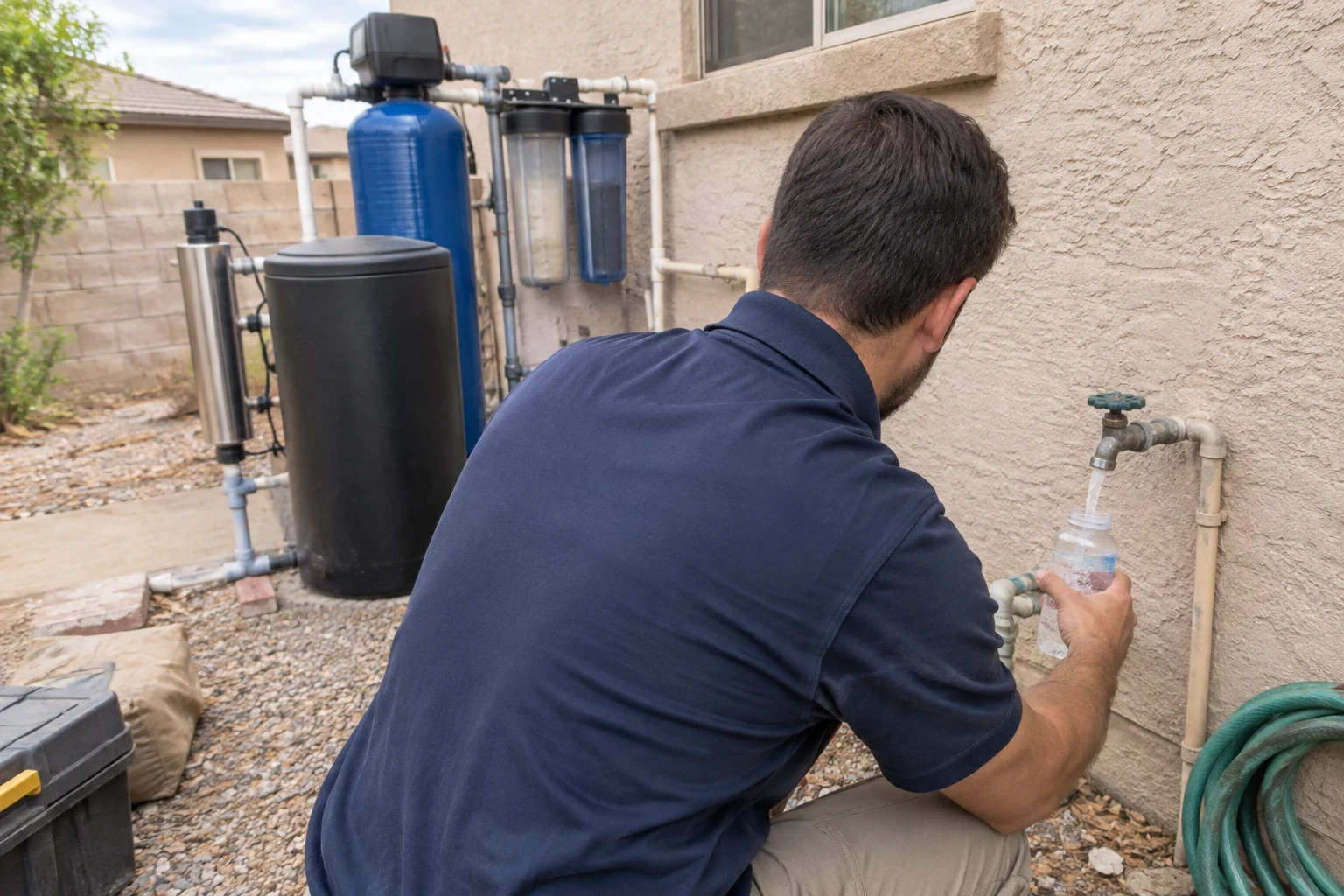
City water is disinfected with chlorine or chloramine before it reaches you. That keeps it safe on the trip through the pipes, but it also leaves a taste and smell many people notice in drinking water, in a hot shower and on their skin and hair. A whole-home filter removes most of it at the main line, before the water splits off to the rest of the house.
It is worth being clear about what this system does not do. Carbon filtration improves taste and odor and catches sediment. It does not remove the hardness minerals that leave white crust on fixtures and glass shower doors. If scale is your main complaint, our water softener installation page covers that work, and many homes here run a filter and a softener together.
From the first call to the final walkthrough, you deal with the same person. You will not repeat your situation to a new voice at every stage.
What the installation includes
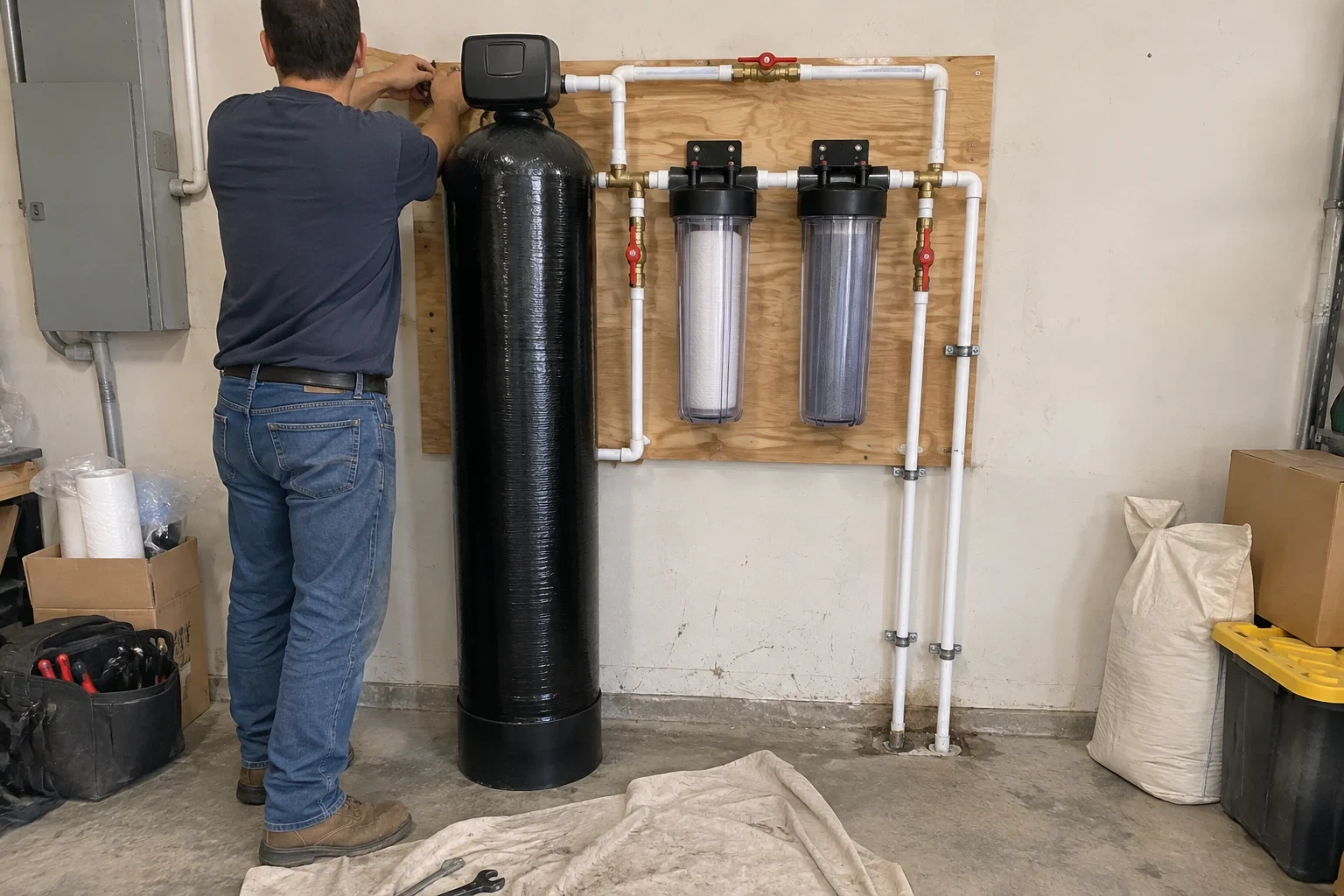
- Sediment prefilter
- Ahead of the main tank, a cartridge catches sand and flakes of old pipe scale. That protects the carbon bed, and it is the only part you would ever replace yourself.
- Carbon media sized to your home
- We choose the tank and media by how many bathrooms you have and how much water your household draws at once. Where the supply is treated with chloramine, we use catalytic carbon, since it handles chloramine better than ordinary carbon.
- Bypass valve and shutoffs
- Turning the bypass routes water around the filter during service, so the rest of your home keeps its supply. Every valve carries a label, so anyone in the house can tell them apart.
- Clean connection at the main line
- Many houses around here were built with a softener loop in the garage, which makes for a tidy tie-in. Where there is none, we add one with potable-rated fittings and a straight, well-supported pipe run.
- Flush, leak check and cleanup
- New carbon releases fine black particles at first, so we flush the system until the water at the tap is clear. Then every joint is checked for leaks, the equipment is wiped down and the boxes and wrapping leave with us.
Signs a whole-home filter makes sense
The bathroom smells of chlorine
Steam from a hot shower carries chlorine into the air, so the odor tends to be strongest there. A filter on the kitchen faucet cannot help with that.
Drinking water tastes like a pool
If taste is the main reason you keep buying bottled water, treating the main line solves it at every faucet instead of only one.
Dry skin or dull hair after bathing
Some people feel a change once chlorine is gone from their shower water. Results differ from person to person, and we will not claim more than that.
Grit in aerators or toilet tanks
Fine sediment collecting in faucet screens points to the need for a prefilter, which also shields appliances further down the line.
A softener is on the way
Over time chlorine breaks down softener resin. Placing carbon in front of a new softener helps the resin hold up longer.
How the job runs
- 1
It starts with a conversation
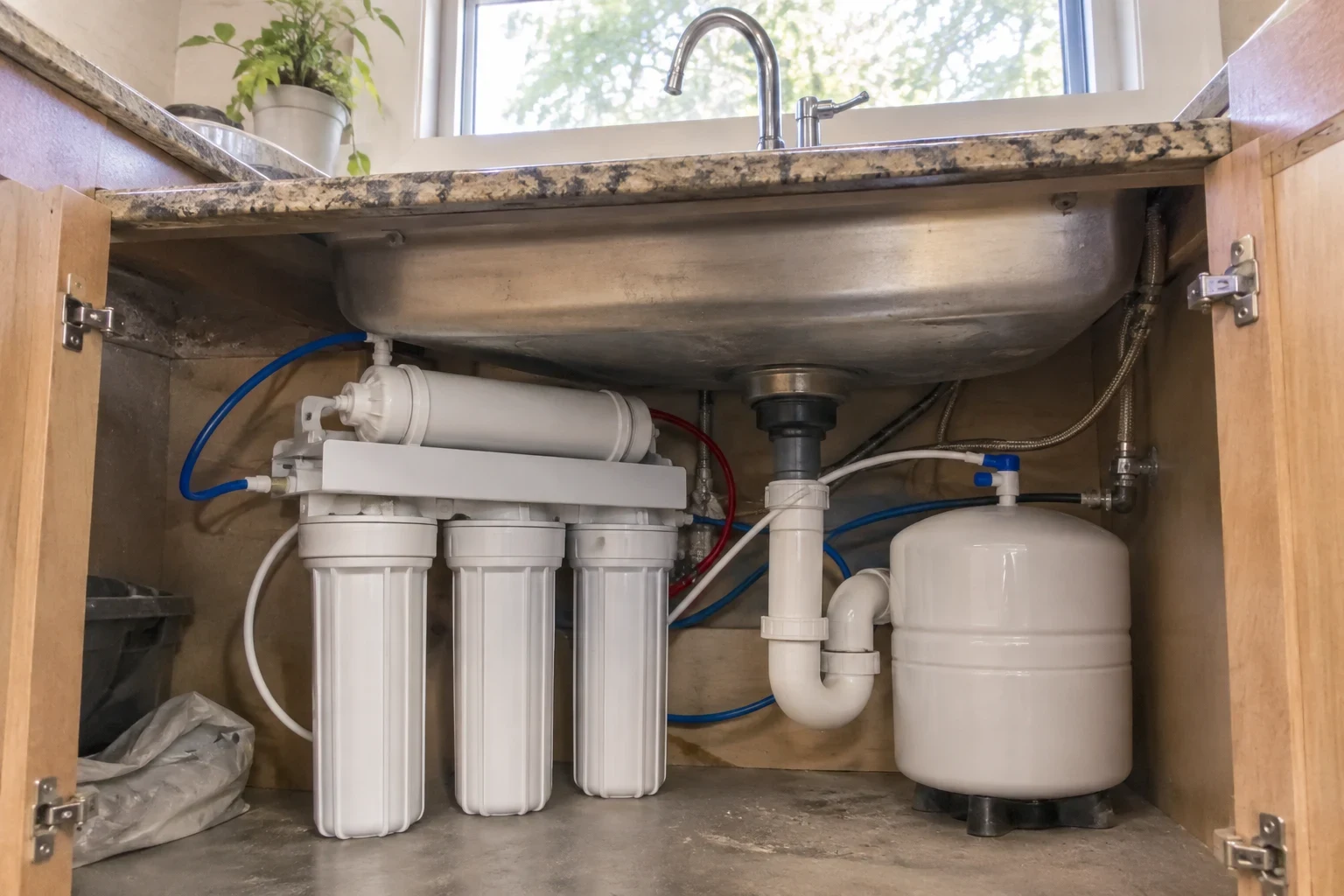
Tell us what bothers you about your water and a bit about the house. You get a straight answer on whether a whole-home filter fits, or whether a reverse osmosis system under the kitchen sink is the better choice.
- 2
A look at your plumbing
During a short visit we locate where the main line enters, measure the space and check whether a loop is already in place. The written estimate that follows lists equipment and labor separately.
- 3
Install day
Before any tools come out, we protect the floor and the path through the garage. With the main valve shut, the system is plumbed into the line. Water is typically off for part of the day, and we give you the time window before work begins.
- 4
Walkthrough and follow-up
We show you the bypass and the prefilter, and explain how to tell when the media is due for replacement. Questions later on go to the same person who gave you the quote.
What shapes the price
Every home gets its own written estimate, because the plumbing and water use differ from one house to the next. Here is what moves the number up or down. Your quote comes by phone, and nothing gets added once the work starts unless you approve it.
- System size
- A larger home with more bathrooms needs a bigger tank to keep flow steady when several taps run at once.
- Type of carbon
- Catalytic carbon for chloramine costs more than standard carbon, and it is the right choice when your water calls for it.
- Plumbing access
- An existing loop in the garage keeps labor simple. Adding a loop, rerouting pipe or mounting equipment in a tight space takes more time and material.
- Pairing with other equipment
- Installing a filter alongside a new softener in one visit usually costs less than two separate jobs.
Whole-home filtration questions
Something not covered here? (623) 343-7851
Will a whole-home filter soften my water?
No. The carbon takes out chlorine taste and odor and the prefilter traps sediment, but calcium and magnesium flow right past both. Scale on fixtures calls for a softener. We can fit the two together and set them up in the correct order.
Does it work on chloramine as well as chlorine?
Yes, as long as the tank holds catalytic carbon. Ordinary carbon is good with chlorine but works more slowly on chloramine. We pick the media to match the disinfectant your water provider uses.
Will I lose water pressure?
A system sized for your home should not leave you with a pressure drop you can feel. Weak showers after an install almost always trace back to a tank that is too small. That is why we size each system to the number of bathrooms instead of fitting one model everywhere.
How much upkeep does it need?
Expect to swap the sediment cartridge from time to time, which takes a quick twist by hand. The carbon itself goes far longer between changes, and the exact interval comes down to your household's daily water use. At the walkthrough we point out what to watch for.
Do I still need a reverse osmosis system at the sink?
Not always. Carbon at the main line takes care of taste and odor throughout the house. A reverse osmosis system adds a further step for drinking and cooking water by lowering dissolved solids. Some families choose both, and others find the filter alone is enough.
Where does the equipment go?
Most often in the garage, at the main line or the softener loop. Where possible we keep tanks out of direct sun and leave the bypass valve easy to reach.
Clean-tasting water, planned by one person
Describe what you taste, smell or see, and the person who picks up will plan the install and stay with it through cleanup. Before any work starts, you will know which equipment is going in and the reason for each piece.